
MY ROLE
Product Strategy / Design Direction / Product Design / Design Systems & Tokens
Team

Evan
/ Product designer

Ameji Ikojo
/ Brand designer

Soji
/ CEO
Project duration
3 Months
Designing a mobile finance app for save, spend, send, and manage digital assets
The Starting Point
CoinProfile already had a working web platform. Users could manage funds, move money, and interact with the product from the web. But as the product grew, the team saw a clear gap. The web platform worked, but users wanted something closer to how they naturally manage money: fast, accessible, and always within reach.
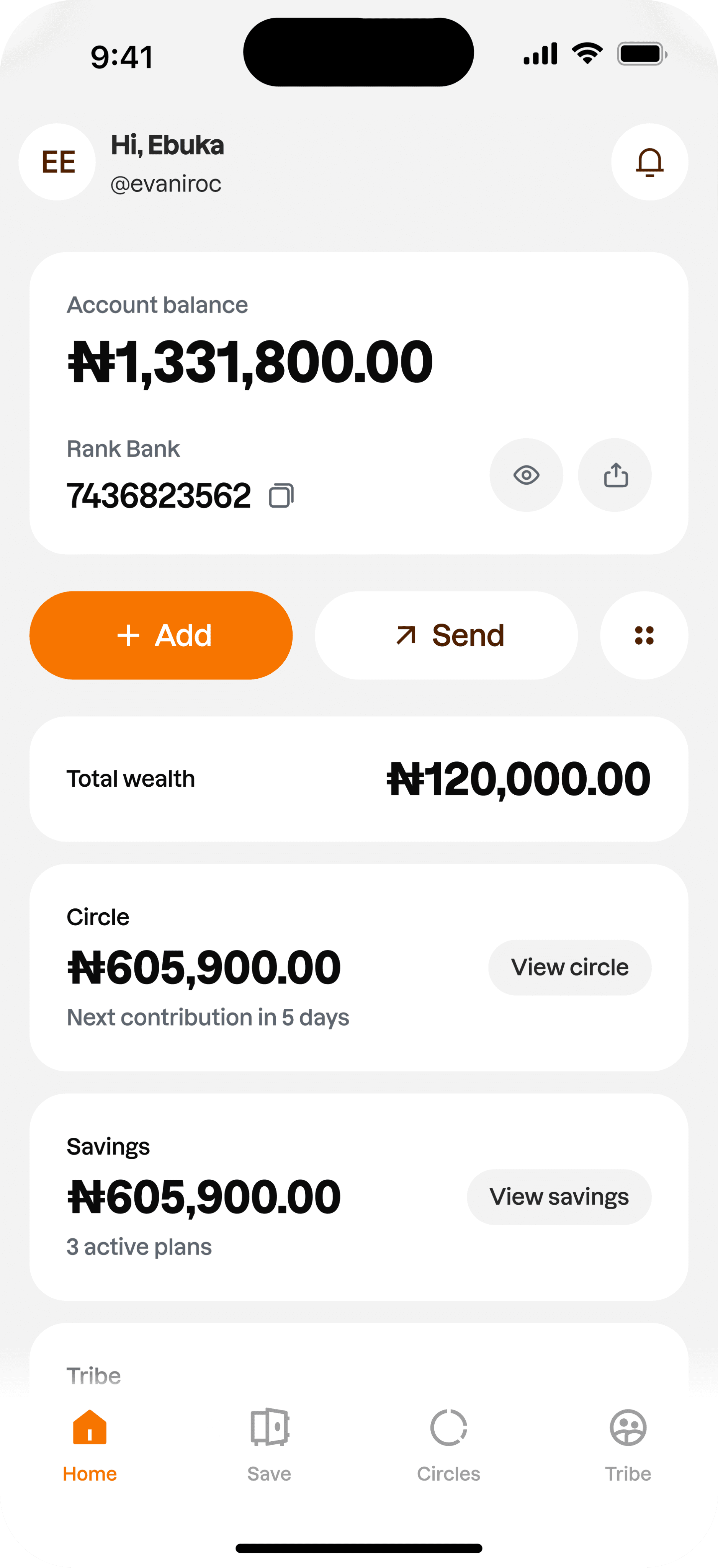
The mobile app was not meant to replace the web platform or feel like a separate product. It had to extend the same experience into a more personal, everyday format. That meant keeping the familiar product logic from the web platform while rethinking the interaction model for mobile. The app needed to feel like CoinProfile, but built for how people actually use their phones.

The Problem
Users needed easier mobile access to their money, but the product itself was complex. CoinProfile was not a simple wallet with one or two actions. It supported account creation, identity verification, wallet funding, fiat and crypto balances, sending money, withdrawals, currency conversion, transaction details, virtual cards, profile settings, and security controls.
All of these flows were connected. A user could not fund a card without a wallet. A user could not access some card features without verification. A user could not send money confidently without understanding their balance. A user could not trust the product if transaction states were unclear.
The real design question became: how do we make a complex money movement product feel clear, safe, and easy to use on mobile without losing the trust and structure users already knew from the web platform?
Understanding the Users
Before designing the app, we spoke with different types of users. Some were active users, some had gone quiet, and some had dropped off at important moments in the product. The goal was to understand where CoinProfile already felt useful, where it felt heavy, and what users expected from a mobile version.
The strongest signal was simple: users wanted easier access to their money. They wanted to check balances quickly, understand funding options better, manage dollars more easily, and have card controls that felt connected to their wallet. Most importantly, they wanted every money movement flow to make them feel sure before they committed.
That shaped the direction of the app. CoinProfile had to feel less like a technical crypto platform and more like a trusted mobile finance experience.
The Design Direction
The product direction became clearer when I framed the app around four core jobs: verify, understand, move, and spend. Users needed to get verified safely, understand where their money was, move money without confusion, and spend with control.
This helped me stop treating every feature as a separate flow. Instead, I looked at the app as one connected financial system. Verification built trust. Wallets created visibility. Funding enabled activation. Sending, withdrawal, and conversion helped users move value. Cards helped users spend. Security controls helped users feel protected.

Carrying the Web DNA Into Mobile
One important design decision was to avoid making the mobile app feel like a completely different product. Users who already knew CoinProfile from the web platform still needed to feel at home. The mobile experience had to feel fresh and easier to use, but not unfamiliar.
I used the existing web platform as the foundation for the app’s product logic. The wallet structure, funding actions, transaction patterns, and financial language had to stay connected to what users already understood. On web, users could scan wider layouts and move through larger pages. On mobile, the same financial actions needed clearer hierarchy, shorter steps, stronger states, and more direct calls to action.
The goal was not to redesign the brand from scratch. It was to make the same CoinProfile experience feel more personal, focused, and usable on a smaller screen.
Making Verification Feel Like Progress, Not a Wall
In many finance products, verification can feel like a hard stop. Users are asked for sensitive information before they fully understand why it matters. For CoinProfile, I wanted verification to feel more like progress.
The app supported different verification paths for Nigerian and international users, including phone verification, Turbo verification, BVN, and Supreme verification. Some features also needed locked states when the user had not completed KYC. The goal was to make each state clear. If a user had access, they could continue. If they were blocked, the app explained why and guided them to the next step.
This was especially important for the card experience. Instead of showing a dead end, the app could explain that verification was required before creating or using a virtual card. Verification became a progressive trust layer, helping users understand what they had completed, what they could access, and what they needed to unlock next.
Lessons Learned
01 – Start with outcomes, not screens
I set North Star metrics (time-to-productivity, access error rate, approval latency) and designed backward from them. Every flow, state, and copy choice tied to a measurable improvement.
02 – Collaboration across disciplines is key
I aligned Product, Engineering, around one shared artifact—the plan preview. Using plain-language diffs, weekly triad reviews, and short async decision memos cut back-and-forth and sped up approvals on risky changes.
“
Potential Impact if Launched







Case study in progress
This case study is still being refined. Reach out if you’d like a walkthrough before it goes live.
✕
